Will Trump come to India for the Quad summit? Amid tariff dispute, India-US relations may see a new beginning
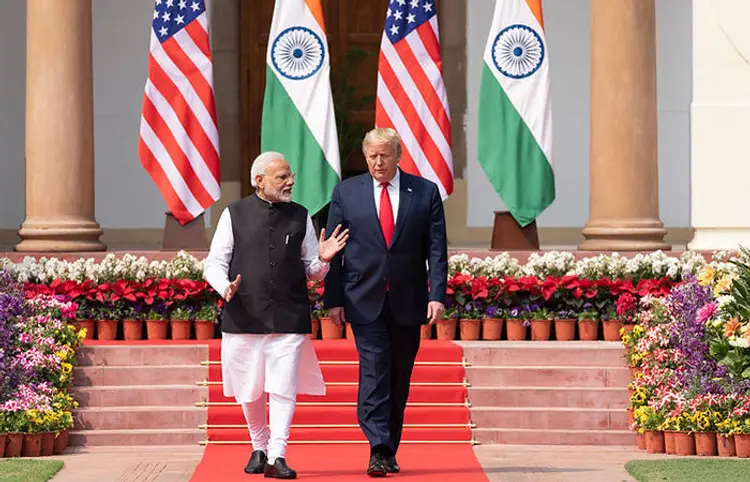
India-US Relations: Tensions are currently running high between India and the US and between President Donald Trump and Indian Prime Minister Narendra Modi, but will the friendship between the two leaders get back on track? This question has become the center of discussion in global diplomacy. Despite trade tensions and 50% tariffs between India and the US, an opportunity to strengthen relations between the two countries can be found in the Quad (Quadrilateral Security Dialogue) summit. India is going to host this summit in November this year.
Trump recently took to his social media platform Truth Social to describe the India-US trade relationship as a one-sided disaster and imposed a total of 50% tariffs on India, including an additional 25% tariff on its purchase of Russian oil. He also claimed that India had offered to reduce the tariffs to zero, but it was too late. On the other hand, India has called the tariffs unfair, unexpected and unreasonable. However, PM Modi did not engage in a war of words with Trump and has kept his reaction restrained, calling it economic self-interest.
On Saturday, Trump made a positive statement in which he said, 'The relationship between India and America is very special and despite the current tensions, Modi and I will remain friends. He is a great Prime Minister. He is great, but I do not like what Modi is doing right now. However, the relationship between India and America is very special. There is nothing to worry about because such a time may come between the two countries sometime.' In response, PM Modi also posted, 'We thank you from the bottom of our hearts. We appreciate and support the sentiments of US President Trump and his positive assessment of India-US relations. India and America have a very positive and far-sighted comprehensive and global strategic partnership.'
The possibility of a phone call between the two leaders has increased.
India has handled the tariff dispute in a mature and pragmatic manner. Finance Minister Nirmala Sitharaman and Commerce Minister Piyush Goyal did not make any harsh remarks against Trump and expressed confidence that the situation would improve soon. This restrained response from India has given Trump an opportunity to defuse tensions, which has increased the possibility of a phone call between the two leaders soon. The two leaders last spoke on June 17.
Will Trump come to India for the Quad summit?
However, uncertainty remains over Trump's decision to attend the Quad summit in India. According to a report, Trump has canceled his plan to visit India, which was previously accepted. The decision reflects US displeasure over trade tensions and India's oil purchasing policy with Russia. India has denied reports of a defence deal being shelved, but experts believe the tensions could affect joint regional initiatives like the Quad.
India will be represented at the United Nations General Assembly (UNGA) this year under the leadership of External Affairs Minister S. Jaishankar. PM Modi is not attending. This is not unusual, as Modi has addressed the UNGA only four times in his 11-year tenure. However, all eyes are on the Quad Summit, where a meeting between Trump and Modi could give a new direction to the relationship.
Personal rapport between Trump and Modi
The personal rapport between Trump and Modi has been a pillar of India-US relations in the past as well. Events like Howdy Modi in Houston in 2019 and Namaste Trump in Ahmedabad in 2020 showcased their friendship on the global stage. But recent tensions, particularly over Russian oil and Trump's claims on the India-Pakistan issue, have strained relations.
The Quad summit, which includes the US, India, Japan and Australia, could be an important platform for the two leaders to improve relations. India's strategic autonomy and its partnership with Russia and China have raised some concerns in the US, but India-US relations will remain strong in the long run as the two countries share deep interests in areas such as defence, technology and energy.
This friendship between the world's largest and oldest democracies may be going through a period of strain, but it is not broken. The coming months will determine whether the personal chemistry between Trump and Modi can once again become the basis of India-US relations.
Comments
Post a Comment